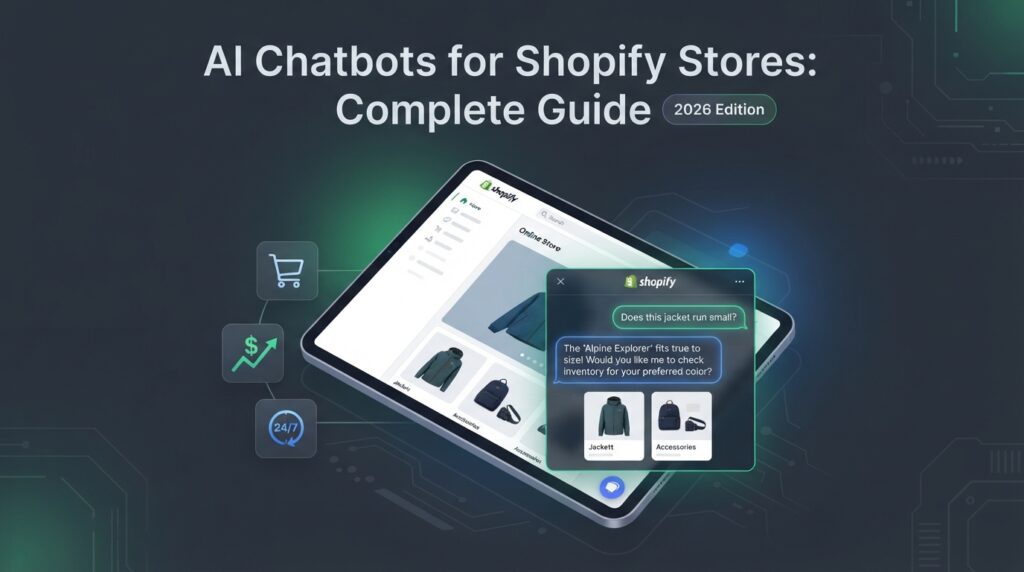
Boost your sales and automate 24/7 customer support with AI Chatbots for Shopify Stores. Discover the complete 2026 guide to choosing, training, and scaling conversational commerce.
If you run a Shopify store, you’ve probably wondered whether an AI chatbot is actually worth adding — or if it’s just another shiny tool that’ll sit unused after the initial setup excitement fades. Fair question. The honest answer is: when implemented well, AI chatbots are one of the highest-ROI additions you can make to a Shopify store in 2027. Done poorly, they’re just an annoying popup nobody talks to.
This guide walks through everything you need to know — what these chatbots actually do, how they differ from the basic support widgets you’ve seen before, and how to set one up in a way that actually drives sales instead of just deflecting support tickets.
What Is an AI Chatbot for Shopify Stores, Exactly?
An AI chatbot for Shopify is a conversational tool, usually installed as an app, that uses natural language processing to talk with your customers in real time — answering questions, recommending products, tracking orders, and sometimes even completing purchases directly inside the chat window.
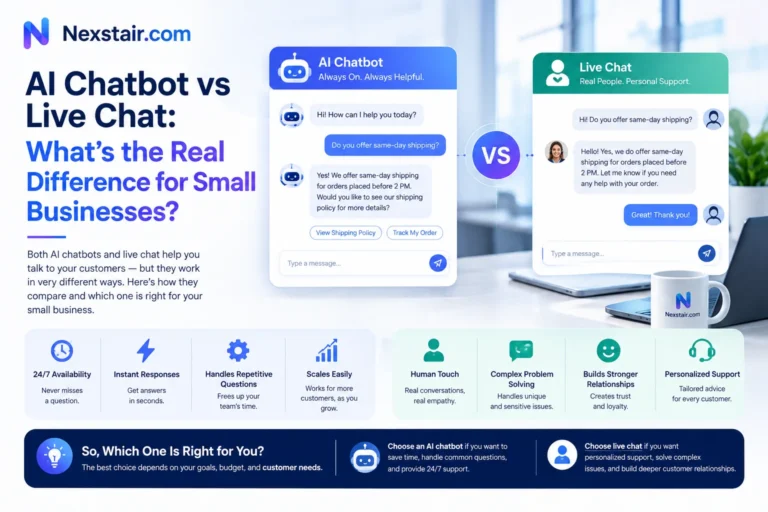
This is fundamentally different from the old-school “live chat” widgets that just routed messages to a human, or basic rule-based bots that could only handle a handful of pre-scripted questions (“Type 1 for shipping, Type 2 for returns”). Modern AI chatbots understand intent, context, and nuance — so a customer can ask something in their own words, like “does this jacket run small?” and get a genuinely useful answer, not a dead end.
Why Do Shopify Stores Specifically Benefit From AI Chatbots?
Shopify stores tend to share a few common pain points that AI chatbots are particularly well-suited to solve:
- High traffic, thin support teams. Most Shopify merchants don’t have a 24/7 support staff, but customers shop at all hours.
- Repetitive pre-sale questions. Sizing, shipping times, return policy, ingredient lists — the same handful of questions come up constantly.
- Cart abandonment. Shopify’s own data has long shown that a majority of carts get abandoned, often because of an unanswered question at the worst possible moment.
- Crowded ad-driven traffic. Paid traffic converts better when there’s someone (or something) to answer objections instantly, right when a shopper is deciding.
An AI chatbot addresses all four at once — without requiring you to hire anyone.
How Do AI Chatbots Actually Increase Sales, Not Just Support Efficiency?
This is the part merchants often underestimate. A well-built AI chatbot isn’t just a support tool — it’s a sales assistant that happens to also handle support. Here’s how it drives revenue directly:
- Answering pre-purchase objections instantly. If a shopper hesitates over sizing, materials, or shipping cost, the chatbot resolves it in seconds instead of losing them to a tab they never come back to.
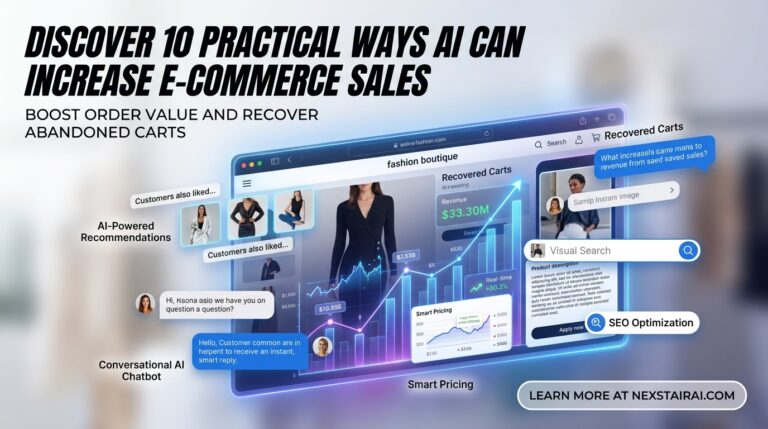
- Recommending products conversationally. Instead of a static “you might also like” grid, the chatbot can ask a question or two and recommend something genuinely relevant — much closer to how a good in-store salesperson would behave.
- Recovering abandoned carts in real time. If someone stalls at checkout, a proactive chatbot message addressing the likely blocker (shipping cost, return policy) can save the sale before they leave.
- Upselling and cross-selling naturally. “That jacket pairs really well with our thermal liner — want me to add it?” feels helpful, not pushy, when it’s contextual and well-timed.
What Features Should You Look for in a Shopify AI Chatbot?
Not all chatbot apps are created equal. Here’s what actually matters when evaluating options:
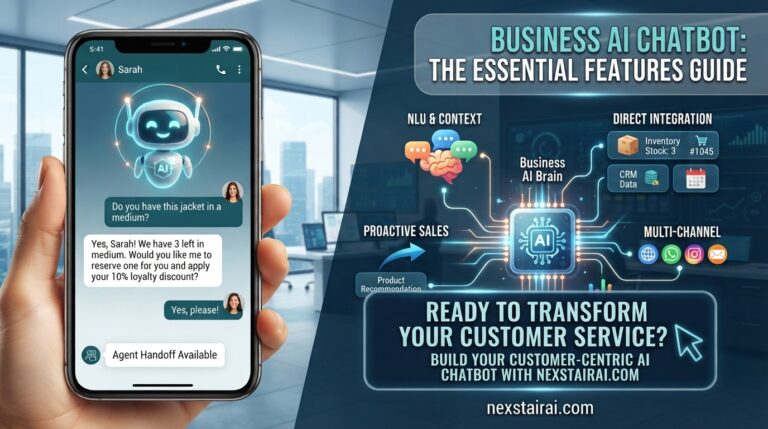
- Native Shopify integration — it should pull real-time inventory, order status, and product data directly, not rely on manually updated info.
- Natural language understanding — it should handle typos, slang, and vague phrasing gracefully.
- Product recommendation logic — ideally tied into your actual catalog and past purchase behavior, not generic suggestions.
- Order and shipping lookups — customers should be able to ask “where’s my order?” and get a real answer, not a redirect.
- Multilingual support — especially important if you sell internationally.
- Human handoff — for the moments a bot genuinely can’t help, a smooth transition to a real person matters a lot for trust.
- Analytics and conversation insights — you want to see what customers are actually asking, so you can fix confusing product pages or policies.
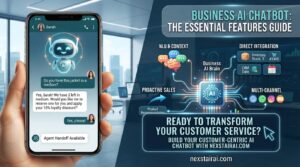
This is exactly the kind of thoughtful, sales-oriented chatbot experience nexstairai.com helps Shopify merchants build — one that feels like a helpful team member, not a rigid script.
How Do You Set Up an AI Chatbot on Shopify?
The general process looks like this, though specifics vary by provider:
- Choose your chatbot solution based on your store’s size, catalog complexity, and whether you need it purely for sales, purely for support, or both.
- Connect it to your Shopify store — most reputable tools offer a direct app integration that syncs product and order data automatically.
- Train it on your store’s specifics — return policy, shipping timelines, sizing guides, FAQs, and brand tone.
- Customize the widget appearance to match your store’s branding so it feels native, not bolted on.
- Set up proactive triggers — for example, a message that appears if someone spends more than 30 seconds on a product page, or hovers near the “leave” action at checkout.
- Test thoroughly with real customer-style questions before going live, including edge cases and awkward phrasing.
- Monitor conversations in the first few weeks and refine responses that aren’t landing well.
What Are Common Mistakes Shopify Merchants Make With Chatbots?
A few pitfalls come up again and again:
- Making the bot too aggressive. Popping up every 5 seconds or interrupting browsing feels desperate, not helpful.
- Leaving it untrained on store-specific details. A generic bot that doesn’t know your actual return window or shipping zones erodes trust fast.
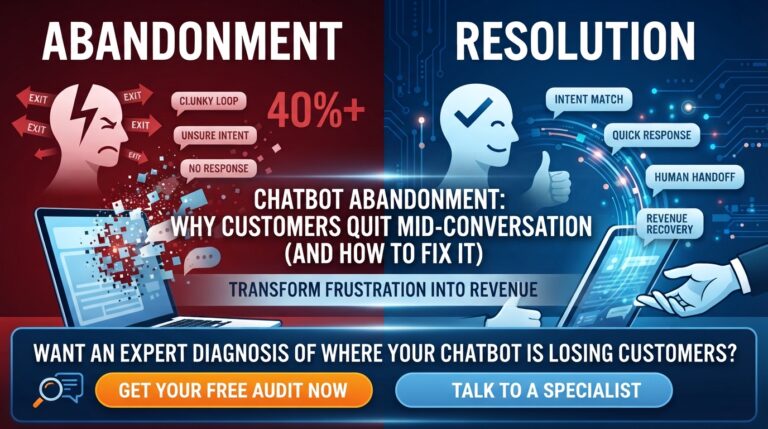
- No fallback for complex questions. If a customer hits a wall with no path to a human, that’s often worse than not having a chatbot at all.
- Ignoring the conversation data. The questions customers ask your chatbot are basically free market research — skipping that insight is a missed opportunity.
- Treating it as “set and forget.” The best-performing bots get refined regularly based on real customer interactions.
How Does an AI Chatbot Compare to Shopify’s Built-In Shop Chat or Basic Apps?
Shopify’s native tools and many basic chat apps are fine for very simple FAQ handling, but they typically fall short in a few areas: limited personalization, no real product-recommendation intelligence, and minimal ability to handle nuanced or multi-part questions. They’re rule-based rather than genuinely conversational.
A dedicated AI chatbot, by contrast, is built to understand context across a conversation — remembering what was already discussed, adjusting tone, and making recommendations based on actual behavior rather than static rules. For stores serious about using chat as a sales channel rather than just a support box, this difference matters a lot.
Is an AI Chatbot Worth It for a Small Shopify Store?
Yes — arguably even more so than for large stores. Small and mid-sized merchants usually can’t afford a large support team, which means every unanswered question at 9pm is a lost sale that a bigger competitor with round-the-clock staff wouldn’t lose. An AI chatbot levels that playing field without the overhead of hiring.
The key is starting focused: get the chatbot handling your top five most common questions and cart-recovery scenarios really well before expanding into more advanced use cases like personalized upselling.
If you’re a Shopify merchant trying to figure out where to start, nexstairai.com can help you build a chatbot strategy tailored to your store’s actual traffic and customer behavior — rather than a one-size-fits-all bot.
How Do You Measure Whether Your Chatbot Is Actually Working?
Track these metrics from week one:
- Conversation-to-purchase rate — how often a chat interaction leads to a completed order
- Cart recovery rate — sales saved from proactive abandonment messages
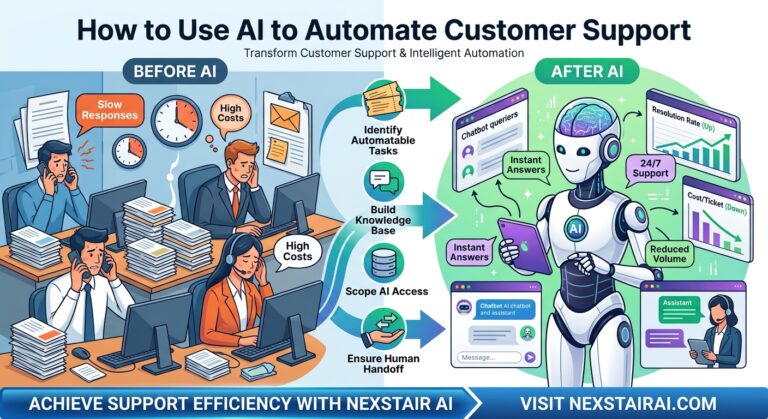
- Deflection rate — how many support questions get resolved without human involvement
- Customer satisfaction on chat interactions — a quick thumbs up/down after conversations tells you a lot
- Drop-off points — where conversations stall or customers disengage, which often points to a confusing policy or missing information
Final Thoughts: AI Chatbots for Shopify Stores
If your store gets meaningful traffic outside business hours, deals with repetitive pre-sale questions, or struggles with cart abandonment, an AI chatbot isn’t a luxury add-on anymore — it’s close to essential infrastructure. The technology has matured enough that even small merchants can implement something that feels genuinely helpful rather than gimmicky.
The merchants seeing the best results treat their chatbot less like a support ticket deflector and more like a 24/7 sales associate who never gets tired of answering the same sizing question for the hundredth time.
Ready to see what a well-built AI chatbot could do for your Shopify store? nexstairai.com specializes in exactly this kind of conversational commerce setup — get in touch to talk through what would work best for your store.